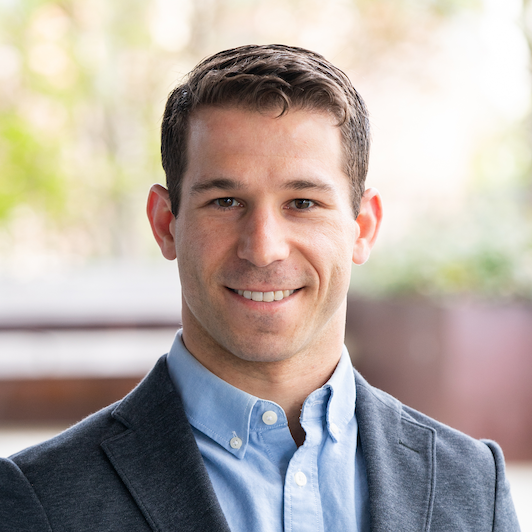
Eric Cramer
MD-PhD Candidate · Computational Oncology
Bridging medicine, mathematical modeling, and machine learning to advance precision oncology and transform cancer treatment through data-driven insights.
MD-PhD Candidate · Computational Oncology
Bridging medicine, mathematical modeling, and machine learning to advance precision oncology and transform cancer treatment through data-driven insights.
I am an MD-PhD candidate in the Medical Scientist Training Program (MSTP) at Oregon Health & Science University. My PhD research in Biomedical Engineering focuses on mathematical and computational modeling for precision oncology using simulation and deep learning, advised by Dr. Young Hwan Chang and Dr. Laura Heiser.
My work spans agent-based modeling of the tumor microenvironment, computational analysis of multiplexed tissue imaging, and machine learning for cancer biology. I aim to develop tools that translate quantitative insights into clinically actionable strategies for cancer patients.
Before OHSU, I was a Data Analyst at the Stanford Systems Neuroscience and Pain Laboratory and a Bioinformatics Engineer at Institut Curie in Paris, where I developed image analysis algorithms and machine learning pipelines for cancer research.
Developing in silico agent-based models to map and control cancer progression in triple negative breast cancer (TNBC). By simulating tumor-immune interactions and therapeutic interventions, this work aims to identify actionable strategies for steering the tumor microenvironment toward favorable states.
Building computational methods for high-plex immunofluorescence tissue images, including COEXIST (serial multiplexed image integration), UniFORM (immunofluorescence normalization), and SHIFT (histological-to-immunofluorescence translation). These tools enable robust spatial analysis of cancer tissue at single-cell resolution.
Developing algorithms for temporal reassignment and correspondence evaluation in time-course imaging of 3D cell cultures, enabling robust longitudinal tracking with integrated quality control. This work supports drug response studies using patient-derived organoid models.
IEEE Control Syst. Lett., 2026. doi:10.1109/LCSYS.2026.3697136
Journal of Surgical Education, 2026. In Press.
Cell, 2025. doi:10.1016/j.cell.2025.06.048
Cell Reports Methods, 2025;5(12):101237. doi:10.1016/j.crmeth.2025.101237
PLOS Computational Biology, 2025. doi:10.1371/journal.pcbi.1013325
Cell Reports Methods, 2024. doi:10.1016/j.crmeth.2025.101172
PLOS Computational Biology, 2022. doi:10.1371/journal.pcbi.1010496
Science Advances, 2021. doi:10.1126/sciadv.abj0320
JAMA Network Open, 2019. doi:10.1001/jamanetworkopen.2019.0168
eGEMs, 2019. doi:10.5334/egems.307